
Affiliate disclosure: This post may contain affiliate links. If you buy through these links, Top Baby Picks may earn a commission at no extra cost to you.
Last updated: November 16, 2026.
Quick Answer: Do Baby Breathing Monitors Work?
Baby breathing monitors work at the job they are designed for: tracking and reporting breathing motion or vital signs so you can glance at reassurance data. What they do not do is prevent SIDS. In a September 2025 safety communication, the US Food and Drug Administration stated it “is not aware of any clinical or scientific evidence that shows that currently available baby products prevent or reduce the chance of SIDS,” and that infant monitors are not a replacement for adult supervision or safe sleep practices. So a breathing monitor is worth buying for peace-of-mind data if you will actually use it, and not worth buying as a safety device, because it is not one.
What Counts as a Breathing Monitor
The term covers three different technologies, and they are not interchangeable:
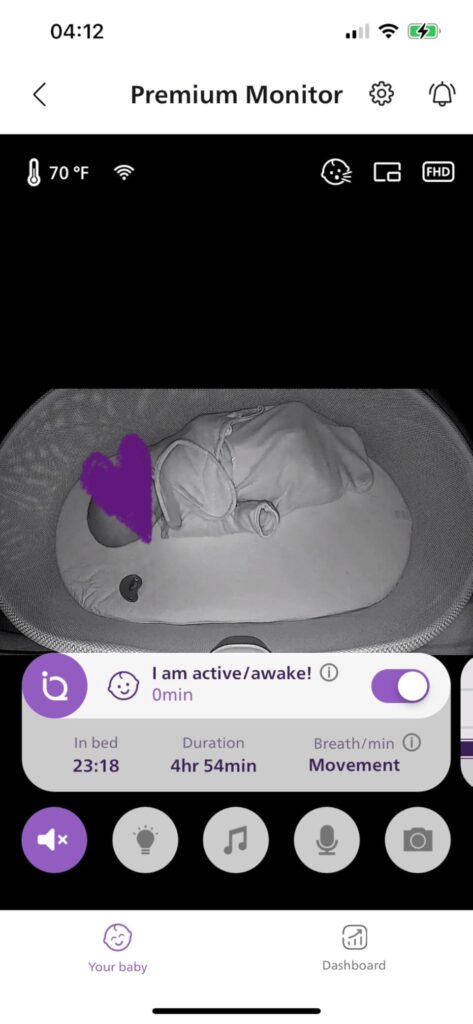
| Camera-based tracking | The camera reads chest movement from video. Examples: Philips Avent SenseIQ (no wearable), Nanit Pro with Breathing Wear (pattern-reading band), CuboAi Plus. |
| Wearable socks and bands | A sensor on the baby’s foot or leg tracks pulse rate, oxygen or movement. Examples: Owlet Dream Sock, Babytone Sleep Sock, eufy Smart Sock. |
| Under-mattress sensor pads | A pad under the crib mattress senses movement and breathing motion, with nothing touching the baby. |
All three can show you that your baby is breathing right now. None of them can guarantee your baby’s safety while you sleep, and none are medical treatment devices unless prescribed by your doctor.
What the FDA and the AAP Actually Say
Two sources matter more than any product page.
The FDA issued a safety communication on September 16, 2025 warning about unauthorized infant devices that claim to monitor vital signs such as pulse rate, oxygen saturation and breathing rate. Its key points: many over-the-counter infant monitors have not been evaluated by the FDA for safety or effectiveness; inaccurate readings can trigger unnecessary medical care or, worse, false reassurance; and these devices are not evaluated for monitoring SIDS, SUID or overall infant health. One consumer wearable stands apart here: the Owlet Dream Sock holds FDA De Novo authorization (DEN220091) as an over-the-counter infant pulse rate and oxygen saturation monitor. Even that authorization is for displaying and notifying about readings, not for preventing SIDS.
The American Academy of Pediatrics safe sleep guidance is what actually reduces risk: baby on their back for every sleep, on a flat, firm, non-inclined surface, in their own sleep space, with nothing soft or loose in the crib. The AAP does not recommend home breathing monitors as a strategy to reduce the risk of SIDS.
The practical takeaway: buy a breathing monitor for data and reassurance if that helps your family, and practice safe sleep for safety. Those are separate jobs.
When a Breathing Monitor Is Worth It
- You want reassurance data and will use it. Many first-time parents sleep better when they can glance at a breathing readout instead of hovering over the crib. That is a legitimate reason to buy one.
- You already want a smart monitor. If you are buying a premium monitor anyway, choosing one with built-in breathing tracking adds the data without a second device.
- Your pediatrician recommends monitoring. Babies with specific medical needs may be prescribed medical-grade monitoring. That is a different category from consumer gadgets, and it is a conversation for your doctor, not a store.
When It Is Not Worth It
- You expect it to prevent SIDS. No consumer product does this, and buying one for that reason can create false security.
- You are prone to anxiety spirals. False alarms happen with every consumer monitor, and for some parents the alerts cost more sleep than they save.
- Budget is tight. Safe sleep costs nothing. A basic audio or video monitor plus safe sleep practices covers real monitoring needs for a fraction of the price.
What to Look for If You Buy One
- Data or alerts? Some monitors show breathing data but never alarm (camera-based systems like SenseIQ). Others can notify you when readings cross thresholds. Know which behavior you are buying.
- Subscription requirements. Some brands lock breathing or sleep history behind a membership; others, like the Philips Avent Premium Connected, include the data with no subscription.
- Wearable or camera. Wearables read directly from the baby but need charging and sizing. Cameras never touch the baby but depend on placement; SenseIQ, for example, needs a close crib-mount position to report.
- FDA authorization status. If vital-sign accuracy matters for your child’s care, the FDA recommends searching its De Novo and 510(k) databases (product code QYU) and talking to your healthcare provider.
- Security. Look for encrypted connections on both the app and any parent unit.
See the Philips Avent Premium Connected (camera-based, no subscription) on Amazon
FAQs About Baby Breathing Monitors
Can a baby monitor prevent SIDS?
No. The FDA says it is not aware of any clinical or scientific evidence that currently available baby products prevent or reduce the chance of SIDS, and any product marketed with such claims has not been cleared for that use. Safe sleep practices are the proven risk reducers.
Are breathing monitor socks safe to use?
A well-fitting wearable from a reputable brand is generally fine as a consumer gadget, but it does not make sleep safer and it is not a medical device unless specifically FDA-authorized, as the Owlet Dream Sock is for pulse and oxygen notifications. Follow safe sleep guidance regardless of any device.
Do pediatricians recommend breathing monitors for healthy babies?
Routine use is not recommended as a SIDS-prevention strategy. Prescribed home monitoring exists for specific medical conditions; if you are worried about your baby’s breathing for a medical reason, talk to your pediatrician rather than self-prescribing a gadget.
Camera-based or sock: which type is better?
It depends on what you want. Camera-based systems need no wearable and work while the baby is in the crib frame, but most show data without alarming. Socks read directly from the baby and can notify, but require charging and correct fit, and most lack FDA evaluation of their accuracy.
Is the Owlet Dream Sock FDA approved?
It holds FDA De Novo authorization (DEN220091) as an over-the-counter infant pulse rate and oxygen saturation monitor, meaning the FDA evaluated it for displaying those readings and sending notifications. That authorization does not extend to preventing or reducing SIDS.
The Bottom Line for 2026
Breathing monitors do work, for the narrow job of showing you breathing data. They do not prevent SIDS, and the FDA and AAP are unambiguous on that point. If reassurance data will genuinely help your household, pick a monitor whose business model and alert behavior match what you want, and treat it as information, not protection. If you are weighing specific models, these reviews cover the main options: camera-based tracking in the Philips Avent Premium Connected review and Nanit Pro review, and wearables in the Owlet Dream Sock review and Babytone Sleep Sock review.